Category Archives: Oral Pathology

Cavernous sinus thrombosis

  • Uncommon
  • Life threatening
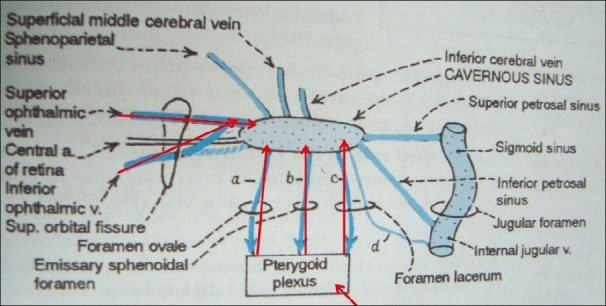
  • Originate from upper anterior tooth infection – via facial artery, angular artery, ophthalmic vein, pterygoid plexus
  • Can result in blindness or death
Cavernous sinus and pterygoid plexus communication. Foramen ovale, foramen lacerum

Clinical:

  • Gross edema of eyelid, associated with pulsating exopthalmus
  • Due to venous obstruction
  • Cyanosis
  • Ptosis
  • Fixed dilated pupil
  • Limited eye movement

Systemic symptoms:

  • Serious illness
  • Rigours
  • High swinging fever
  • Deteriorating eyesight

Picture

Osteomyelitis

Predisposing factors:

1. Reduced host resistance:

2. Reduced jaw vascularity:

Pathogenesis

  • Pus accumulates in marrow spaces
  • Increases intramedullary pressure
  • Compress vasculature
  • Decreased blood supply
  • Decreased nutrients and hypoxia
  • Necrosis of bone
  • Sequestrum
  • Spreads to subperiosteal area
  • Perforation
  • Fistula to skin and oral mucosa

Microbes

  1. G+ve = S. aureus, S. albus, Hemolytic strep
  2. G-ve = Klebsiella, Pseudomonas, Proteus, E. coli
  3. Anaerobes = Pepto-streptococcus, bacteroid, fusobacteria

Histopathology

  • Localized pus + lymphocytes + plasma cells
  • Dead bone – empty lacunae ( no osteoclasts)
  • Pus found in medulla
  • Periosteum distended by pus
  • Osteoblastic and osteoclastic activity
  • Involucrum – New bone
  • Sequestrum – Dead bone
  • Onion skin appearance (in chronic)

Clinical classification

1. Anatomical location:

  • Intramedullary
  • Subperiosteal
  • Periosteal

2. Duration & severity:

  • Acute
  • Chronic

3. Presence/ absence of suppuration:

  • Suppurative:
    • Acute
    • Chronic
      • 1ry (denovo)
      • 2ry (low grade infection)
    • Infantile
  • Non suppurative:
    • Chronic – Moth eaten on x-ray
    • Osteoradionecrosis
    • Garre’s osteomyelitis – Onion skin on x-ray
      • Chronic osteomyelitis with proliferative periostitis
      • Young people
      • Increased reactive new bone formation
    • Atypical osteomyelitis:
  • Others:
    • Chronic diffuse sclerosing – Old people, super infection of florid COD
    • Chronic focal sclerosing – Young people with carious teeth

Clinical features

  • Pain
  • Swelling
  • Pyrexia
  • Lymphadenopathy
  • Periosteum distended with pus
  • Discharging sinus
  • Rampant caries
  • Periodontitis
  • Anesthesia, paresthesia of lower lip
  • Teeth may become mobile, tender
  • Pus exudes from sockets or gingival margin
  • Difficult to open mouth – due to edema of muscle

Management

1. Early lesion:

  • Basic incision and drainage
  • Supportive therapy: Rehydrate, nutritional diet, hyperbaric O2

2. Severe lesion:

  • Antibiotic
  • Surgical debridement
  • Irrigation
  • Sequestrectomy/ resection ± decortication

Picture


Acute osteomyelitis

Source:

  • Periapical inflammation
  • Open fracture (involving PDL socket/ penetrating contaminated injury)
  • ANUG
  • Pericoronitis

Predisposing factors:

  • Reduced host resistance
  • Paget’s disease
  • Radiation damage
  • Trauma including gunshot wounds

Epidemiology:

  • Adult males (Fights)
  • Mandible (has low blood supply)

Radiology:

  • Loss of trabeculae pattern
  • Areas of radiolucency – bone destruction
  • Moth eaten appearance
  • 30% osteolysis needed for x-ray changes

Complications:

  • Anesthesia of lower lip
  • Pathological fractures – rare
  • Chronic osteomyelitis
  • Cellulitis/ septicemia in immunocompromised patients

Chronic non-suppurative osteomyelitis

Etiology:

  • Acute osteomyelitis
  • Radiation
  • Persistent low-grade infections

Predisposing factors:

  • Similar to acute
  • Local bone sclerosis
  • Localized reaction of bone to inflammation or infection

Histology: Marrow spaces devoid of pus and bacteria

Types:

TypeAcuteChronicGarre’sChronic diffuse sclerosingChronic focal sclerosing
EtiologyStaph, strepStaph, strepStaph, strep, Sequel of tooth abscess/extractionLow grade infection, pulpitis, PDL diseaseLow grade focal bone irritation eg. pulpitis
ClinicalPain, pyrexia, lymphadenopathy, leukocytosisVariable pain, swelling, discharging sinusLower molars of children, adolescentsPain, discharging sinus, usually mandibleAsymptomatic, found on routine exam
X-rayNo changeMoth eaten radiolucencyMottled radiolucency, onion skin patternGeneralized opacificationOpaque mass at root apex
SclerosisPeriosteal reaction at lower border of mandiblePeriapical/ periodontalPeriapical, non vital tooth
AgeAdolescentsAdultChildren and young adults
HistopathologyParallel layers of cellular woven bone, small sequestraSclerosing + remodeling, scant marrow space, adjacent inflammationDense sclerotic
Types of osteomyelitis

NB: Sequestra separate spontaneously or incorporated into healing bone

Complications:

  • Spread of infection in abnormal bone (eg. Paget’s disease)
  • Infection with low virulence organisms/inadequate antibiotic treatment – long standing osteomyelitis with sclerosis of viable bone

Bisphosphonate induced osteomyelitis

  • Bisphosphonate suppresses osteoclast activity and reduces blood flow
  • Therefore inhibits bone resorption
  • Bisphosphonates lessens the bone destruction (caused by malignancy) but there is an increased susceptibility to ischemia
  • High dose can cause osteonecrosis
  • Therefore before bisphosphonate is administered, the following should be considered:
  1. Potential problems to be eliminated
  2. At risk patient should be identified by history taking and predisposing factors
  3. Surgical procedures should be avoided for as long as possible after administration
  4. Extractions should be followed by antibiotics and mouth rinse until socket has healed

Risk factors:

  • IV high dose bisphosphonate treatment usually for bone metastases/hypercalcemia of malignancy
  • Radiotherapy to head and neck
  • Immunosuppression from chemotherapy/steroids
  • Anaemia
  • Dental surgery/sepsis, ill fitting dentures and poor oral hygiene
  • Female patient
  • Elderly patient
  • Smoking

Clinical:

  • Non healing extraction socket/asymptomatic exposed bone
  • Do not respond to conservative treatment
  • Extractions could precipitate onset
  • Once infection is established – acute/chronic osteomyelitis may ensue – this depends on both virulence or organism and host resistance
  • Because bisphosphonate reduce bone turnover, sequestra develop very slowly

Complications:

  • Oroantral and cutaneous fistulae
  • Suppuration

Osteoradionecrosis

  • Osteomyelitis caused by radiotherapy
  • Radiotherapy causes narrowing of blood vessels therefore decreased blood supply to bone
  • Diagnosis based on history of radiotherapy
  • Once infection develops – course is similar to conventional osteomyelitis
  • But bone is more fragile due to radiotherapy – therefore infection more extensive, and sequestration is delayed

Complications:

  • Extraoral sinuses
  • Pathological fracture
  • Pain that is difficult to manage (even when using opioids)

Picture

Maxillofacial infections

Virulence of microbes

1. Adhesion: Microbe attaches to body surface

2. Invasiveness: Microbe spreads to host tissues after establishing infection

3. Toxigenicity: Endotoxins and exotoxins

4. Communicability: Spread from one host to another

5. Evade immune defense:

  • Inaccessibility to immune response
  • Resist complement mediated lysis and phagocytosis
  • Variation or shedding of antigens
  • Specific/ non specific immune suppression

6. Induce damage to host tissue defense: Scarring, hypersensitivity reaction

7. Cell lysis: Due to rapid replication in host ells, therefore burst


Rheumatic heart disease

Autoimmune disease

Etiology:

  • β hemolytic streptococcal pharyngitis
  • 2-3 weeks after strep pharyngitis in patients 5-15 years old
  • Immune destruction of cardiac myosin by cross reactivity – antistrep M proteins react with cardiac myosin

Diagnosis:

  • Evidence of preceding strep infection
  • 2 major or 1 major + 2 minor manifestations

NB: Orofacial symptoms: Tonsillar exudates, strawberry tongue

Diagnostic criteria of rheumatic fever

Complications:

  • Pancarditis
  • RHD which involves vascular fibrosis (vegetations) and subsequent insufficiency – Infective endocarditis

Histology:

Focal inflammatory lesions (Aschoff bodies) + Plump macrophages (Anitschkow cells)

Fatal due to:

  1. Cardiac failure:
    • Valvular deformity
    • Aortic stenosis
    • Cardiac thrombi
  2. Bacterial endocarditis: Acute, subacute
  3. Emboli: in brain, lungs, spleen, kidney

Infective endocarditis

Pathogenesis:

  • Damage to endothelial lining of valves – expose underlying collagen and tissue factor – platelets and fibrin adhere to it and form blood clot – sterile thrombus
  • Bacteremia – bacteria attach to thrombus using adhesins – more bacteria adhere to thrombi – form bacterial colonies on the valve vegetation
  • Vegetations are friable

Diagnosis:

Infective endocarditis: Modified Duke criteria

Difference between RHD and IE

IERHD
Etiology– Strep viridans: 50-60%
– Staph aureus: 10-20%
– Culture negative cases: 10%

HACEK: Normal flora in mouth
– Haemophilus species
– Aggregatibacter actinomycetemcomitans
– Cardiobacterium hominis
– Eikenella corrodens
– Kingella kingae
Hypersensitivity reaction to group A β hemolytic streptococci
Risk factorsMitral & aortic valve:
– Valve disease
– Prosthetic valve
– Vascular grafts
– Vascular catheters

Tricuspid valve:
– IV drug use
Repeated and untreated pharyngeal infections
Diagnostics– Positive blood cultures in 90% of cases
– Septic infarcts: CVS, CNS, renal, therefore organ failure
– M protein – antibodies cross react with cardiac glycoproteins
ASOT
– Anti-DNAase B
Aschoff bodies, Anitschkow cells
Difference between rheumatic heart disease and infective endocarditis

Paramyxoviridae

Read pathogenesis in virology

Measles:

  • Pharyngitis
  • Contagious
  • Incubation 7-10 days
  • Prodromal – fever, malaise, photophobia, cough
  • Koplik’s spots (Picture) on buccal mucosa
  • Symptomatic treatment – bed rest, hydration, quarantine, treat fever
  • Prevention MMR vaccine

Mumps:

  • Droplet infection
  • Causes viral sialadenitis
  • Trismus, fever, headache, malaise, preauricular pain
  • Systemic – oophoritis, orchitis, affect kidney, liver, pancreas
  • Subside in 10 days
  • Prevention MMR vaccine

Common surgical infections

1. Abscess

  • Collection of pus
  • Complication: if partly sterilized by antibiotics – forms antibioma

2. Cellulitis

  • Non suppurative and poorly localized
  • Toxaemia common

3. Lymphangitis

  • Painful red streaks in affected lymphatic vessels + painful lymph nodes in affected areas

4. Gas gangrene

  • Etiology: C. perfringens and β hemolytic strep
  • At risk:
    • Military surgery
    • Traumatic surgery
    • Colorectal ops
    • Immunocompromised patient
    • DIabetes
    • Malignancy
  • Clinical:
    • Severe wound pain
    • Crepitus
  • Management:
    • Aggressive debridement
    • Antibiotics

5. Necrotizing fasciitis

  • Rapid progressing fasciitis of subcutaneous tissue and fascia
  • Does not damage muscles like NOMA
  • Synergistic spread of gangrene caused by mixed infection
  • Etiology: Group A streptococcus
    • Dental infection, salivary gland infection, epiglottic infection, otological/dermal infection
    • Peritonsillar abscess
    • Cervical adenitis
    • Post surgical
    • Trauma
  • Always immunosuppressive illness present:
    • Diabetes
    • Renal failure
    • HIV
    • Liver cirrhosis
    • Lymphoma
    • Leukemia
    • Elderly
    • Obese
  • Variants:
  • Classification:
    • Type I – Polymicrobial infection – eg. strep pyogenes, staph aureus, clostridium perfringens, bacteroides fragilis
    • Type II – Monomicrobial – MRSA (Methicillin-resistant Staphylococcus aureus)
  • Patholgy:
    • Small innocuous wound – pain, erythema, increased temperature, like cellulitis – paresthesia, blistering – skin necrosis – septic shock, hypotension, fever, malaise – multiple organ failure and death
    • NB: Thrombosis of blood vessel in skin lead to skin necrosis
  • Clinical:
    • High fever + toxicity
    • Severe wound pain
    • Crepitus
    • Spreading inflammation
    • Smell
  • Management:
    • Debridement
    • Broad spectrum antibiotic
    • Allow granulation
    • Skin grafting
    • Address immunosuppressive disease
    • Good nutrition for wound healing

6. Alveolar osteitis (dry socket)

  • Etiology:
    • Excessive trauma during extraction
    • Misuse of LA
    • Limited local blood supply
    • Oral contraceptives
    • Radiotherapy
    • Dislodged clot from socket by patient (by finger, gargling, spitting)
    • Osteosclerotic disease
  • Clinical:
    • Pain a few days after extraction – deep seated, severe, aching, throbbing
    • Mucosa red and tender
    • Clot absent – replaced with saliva and food debris
    • White dead bone
  • Pathology:
    • Destruction of blood clot in socket – open socket – food and debris in direct contact with bone – dense bone dies
    • Necrotic bone lodges bacteria – proliferate
    • Inflammation occurs to localize infection in socket wall
    • Osteoclasts seperate dead bone
    • Healing by granulation tissue
  • Management:
    • Anaesthetize patient
    • Irrigate the socket: Normal saline, chlorhexidine
    • Suction
    • Curettage of necrotic white bone till it bleeds
    • Place alvogyl dressing in the socket

Infection pathways

Infection pathways from non vital pulp

Hematology

Coagulation cascade and disorders

Coagulation cascade
Coagulating factors names
normal coagulation values
Coagulation disorders

Pathological signs

  1. Tired/dyspnea – Decreased oxygen carrying capacity of anemia
  2. Mucosal pallor – Anemia
  3. Glossitis/atrophic glossitis – B12 deficiency
  4. Koilonychia (spoon nails) – Iron deficiency
  5. Jaundice – Hemolysis, bilirubin accumulates
  6. Increased risk of infection – Leukemia, lymphoma
  7. Splenomegaly – Leukemia, lymphoma, portal hypertension, hemolytic anemia
  8. Lymphadenopathy – Leukemia, lymphoma, infectious mononucleosis
  9. Bone pain and fractures – Osteoclast activation in myeloma
  10. Purpura, bruising, bleeding – Thrombocytopenia, platelet dysfunction
  11. Bruising, muscle and joint bleeding – Coagulation factor deficiencies

Anemia

Etiology

  1. Decreased intake of hematinics – diet, socioeconomic, dysphagia
  2. Impaired absorption – Small intestine disease
  3. Increased demand – Pregnancy, hemolysis
  4. Impaired erythropoiesis – Aplastic anemia, leukemia
  5. Hemolytic anemia – Sickle cell disease, thalassemia
  6. Blood loss – Menorrhagia, GIT lesions (ulcers, carcinoma), trauma

Clinical

Fall in Hb levels below normal, therefore fall in oxygen carrying capacity leading to:

  • Cardiorespiratory – Dyspnea, congestive cardia failure, murmur, angina
  • Cutaneous – Pallor, brittle nails, koilonychia
  • Oral – Ulcers, angular stomatitis, sore mouth
  • Asymptomatic

Classification

RBC size:

  • Normocytic – Aplastic anemia
  • Microcytic – MCV < 80 fL – Iron deficiency, thalassemia
  • Macrocytic – MCV > 100 fL – B12 and folate deficiency, aplastic anemia, alcoholics, pregnancy, malignancy, liver disease, chronic hemolysis

Etiology:

1. Blood loss:

  • Acute – Trauma
  • Chronic – GIT/gynecological lesions

2. Hemolytic:

  • Intrinsic:
    • RBC membrane disorder – Spherocytosis, elliptocytosis, lipid defects
    • Enzyme deficiency – Glycolytic enzymes, hexose monophosphate enzymes
    • Hb synthesis disorder – Deficient Hb (thalassemia), abnormal Hb (sickle cell)
  • Extrinsic:
    • Isoantibodies – Transfusion reaction, erythroblastosis fetalis
    • Autoantibodies – Drug associated, idiopathic
    • Hypercoagulation states – TTP, DIC
    • Chemical injury – lead poisoning
    • Infections – Malaria
    • Sequestration in spleen

3. Impaired RBC production:

4. Deficiency anemia – B12, folate, iron

5. Idiopathic:


1. Iron deficiency anemia

Etiology:

  • Blood loss
  • Poor intake
  • Poverty
  • Old age
  • Malabsorption
  • Achlorhydria (failure to produce gastric acid)

Lab:

  • ↓ Hb
  • ↓ MCV
  • ↓ Serum iron
  • ↓ FEP (Free erythrocyte protoporphyrin)
  • ↑ RDW (red blood cell distribution width)
  • ↑ TIBC

Management: Iron supplements, improve diet


2. B12 deficiency anemia

Etiology:


3. Pernicious (Addison’s) anemia

Megaloblastic anemia due to B12 malabsorption

Etiology:

  • Autoimmune disease – Antibodies produced against gastric parietal cells (produce IF) and intrinsic factor, which is needed for B12 absorption

Clinical:

  • Atrophic gastritis
  • Achlorhydria

Diagnosis: Schilling test

Complications:

  • Gastric cancer
  • Peripheral paraesthesia

Management: hydroxocobalamin supplement


4. Folate deficiency

Folate absorbed in small intestine

Etiology:

  • Poor intake
  • Poverty
  • Old age
  • Alcoholism
  • Malabsorption:
  • Increased demand:
    • Infancy
    • Pregnancy
    • Chronic hemolysis
    • Malignant disease
    • Exfoliative skin
    • Chronic dialysis
  • Drugs:
    • Alcohol
    • Barbiturates
    • Cotrimoxazole
    • Methotrexate
    • Primidone
    • Phenytoin
    • Pyrimethamine
    • Pentamidine
    • Triamterene
    • Oral contraceptives

Lab:

  • Normal Schilling test – to rule out pernicious anemia
  • Decreased folate levels in RBC
  • Macrocytic cells

Complications: Neural tube defect + cleft lip-palate in fetus

Management: Folic acid supplements


5. Aplastic anemia

Pancytopenia with non functioning bone marrow

Etiology:

  • Genetic:
  • Autoimmune:
    • Graft vs host disease
    • Irradiation
  • Drugs:
    • NSAIDS
    • Antithyroids
    • Allopurinol
    • Anticonvulsants
    • Sulphonamides
    • Chloramphenicol
    • Phenylbutazone
    • Penicillamine
  • Virus: HIV, EBV, CMV, Hep B and C
  • Chemicals:
    • Benzene
    • Toluene
  • Heavy metals: Au, Pd, arsenic

Lab:

  • TBC
  • PBF
  • Bone marrow aspirate

Management:

  • Supportive: Antibiotics
  • Definitive: Bone marrow transplant/stem cell transplant
  • Hematopoietic growth factors
  • Immunosuppressants
  • Blood transfusion – risk infection and iron overload

6. Hemolytic anemia

Hemoglobinopathy – Hereditary disorder, abnormal Hb production

  • Thalassemia – Quantitative Hb defect – α/β
  • Sickle cell – Qualitative Hb defect
    • Heterozygous (HbAS) – common
    • Homozygous (HbSS)
    • Heterozygous + another hemoglobinopathy

Sickle cell anemia

Etiology:

  • In β chain of Hb, substitution of valine for glutamine
  • In low oxygen/increased pH – RBC form sickle shape
  • Low oxygen – HbS molecule polymerizes – gelation/crystallization – sickle shape forms

Clinical:

  1. Anemia and hemolysis:
    • Jaundice
    • Gallstones
    • Reticulocytosis
    • Hyperbilirubinaemia
  2. Crisis:
    • Hematological crisis
    • Dactylitis
    • Infarcts of vital organs – CNS stroke, multiorgan failure
    • Skin ulcers
    • Acute chest syndrome (fat emboli)
    • Recurrent pain
  3. Impaired growth
  4. Skeletal deformity
  5. Susceptible to infections
  6. Mild splenomegaly
  7. Hypoxia

NB:

  • Common cause of death – infections and thromboses
  • Infarcts in jaw mimic tooth ache

Lab:

  • TBC: Hb < 9g/dl
  • PBF: Target cells and reticulocytes 5-25%, sickled erythrocytes
  • Positive sickledex test
  • Bone marrow – hyperplasia

X-Ray:

  • Prominent cheek bones and skull changes (resemble crew cut) – Dues to bone resorption and 2ry bone formation

Management:

  • Analgesics
  • Antibiotics
  • Blood transfusion only if CVS symptoms/ pulmonary thromboses
  • Folate therapy
  • Hydroxy urea – increased HbF

Dental management:

  • HbAS:
    • In case of full GA – full oxygen maintained throughout
    • Treat respiratory infections vigourously
  • HbSS:
    • AB prophylaxis for all procedures
    • Avoid elective surgery
    • Must have blood for transfusion, full anesthetic and emergency facilities

Thalassemia

Etiology:

  • Mutations – decrease rate of synthesis of α or β globin chains
  • Results in: Inadequate HbA and decreased MCHC
  • Excess insoluble α globulin precipitates – membrane damage – further hemolysis

Clinical:

  • Skeletal deformity – crew cut
  • Splenomegaly, hepatomegaly
  • Severe hemosiderosis
  • Lymphadenopathy
  • Growth retardation
  • Cachexia

Lab:

  • Bone marrow:
    • Erythroid hyperplasia
    • Increased medullary spaces
    • Infiltrates in cortex

X-ray: Cut crew appearance of skull + new bone formation


7. Anemia as a complication of chronic disease

  • Chronic inflammation
  • Neoplasms
  • Leukemia
  • Liver disease
  • HIV infection
  • Rare – Hypothyroidism, hypopituitarism, hypoadrenocorticism, Uremia

Platelets

Failed platelet production

  • Congenital disorders: Type IIb Von Willebrand syndrome
  • Megakaryocyte depression: Drugs, virus, chemicals
  • General marrow failure:
    • Aplastic anemia
    • Leukemia
    • Megaloblastic anemia
    • Metastases
    • Drugs
    • Virus
    • Irradiation
    • Ethanol
    • Cytotoxics

Increased platelet destruction

  • ITP
  • HIV associated
  • DIC
  • SLE
  • Chronic lymphocytic leukemia
  • Malaria
  • Drugs: ASA, B-lactam AB, valproate, cytotoxics
  • Splenomegaly
  • Transfusion of stored blood

Thrombocytopenia

Etiology: Commonly ITP – autoimmune disease

Clinical:

  • Platelet < 100 x 109/L
  • Petechiae, ecchymosis, post-op hemorrhage

Management:

  • No LA if < 30 x 109/L
  • Minor surgery if > 50 x 109/L
  • Major surgery if > 75 x 109/L
  • Correct with platelet rich plasma and platelet rich concentrate

Thrombocythaemia

Etiology:

  • Myeloproliferative disease ± myelofibrosis/ polycythaemia/ chronic granulocytic leukemia

Clinical: Thrombosis due to increased platelets

Management:

  • 32P – labelled phosphorus
  • Plateletpheresis
  • Interferon
  • Corticosteroids
  • ASA

Acquired coagulation defects

1. Anticoagulant therapy

  • Antagonize vitamin k activity – therefore prolonged prothrombin time and activated partial thromboplastin time
  • Heparin (short term)
  • Warfarin (long term)

2. Vitamin K deficiency

  • Vitamin K synthesized in gut

Etiology:

  • Broad spectrum AB for prolonged periods
  • Poor absorption/ malabsorption
  • Obstructive jaundice
  • Failure of utilization
  • Oral anticoagulant therapy
  • Liver failure

Management:

  • Vitamin K therapy (phytomenadiaone)

3. Liver disease

  • Results in 2ry factor XII deficiency

4. Disseminated intravascular thrombosis (DIC)

Etiology:

  • Incompatible blood transfusion
  • Severe sepsis
  • Obstetric complications
  • Severe trauma
  • Burns
  • Cancer

Clinical:

  • Hemorhagic tendencies
  • Thrombotic phenomena
  • Hemolysis
  • Shock

Management:

  • Correct underlying cause
  • Treat hypoxia and acidosis
  • Heparinization
  • Replace clotting factors and platelets
  • Antifibrinolytic therapy

5. DVT

Affects deep calf veins

Etiology:

  • Immobility in elderly
  • Bed ridden
  • Post-op patients
  • Oral contraceptives

Fatal complication: Pulmonary embolism

Prevention:

  • Early mobilization
  • Low dose SC heparin – 2 hours pre-op – then every 8-12 hours until patient on feet

Management: Low dose heparin
Aneurysmal bone cyst

Etiology

2 theories:

  1. Development of a dilated vascular bed in a pre-existing lesion
  2. De novo bleeding within bone

Epidemiology

  • Patient under 20 years
  • More in mandible
  • Female predilection

Clinical

  • Facial swelling
  • Progresses rapidly
  • Pain/painless swelling of mandible

Histology

  • Large blood filled spaces + fibrous tissue wall + no lining
  • Surrounded by fibroblastic CT
  • Multinucleated giant cells

Radiology

  • Unilocular/multilocular radiolucency
  • Cortical expansion – balloon/blown out distention of bone

Management

  • Curettage
  • Bleeding complications common intraoperatively

Picture

Solitary bone cyst

Hemorrhagic/traumatic bone cyst

Etiology

  • Not known, bleeding in jaw with clot resorption

Clinical

  • Painless swelling of mandible
  • Usually teenagers

Radiology

  • Radiolucency on routine examination
  • Dead space in medullary bone, especially mandible
  • Cavity expands between teeth roots

Histology

  • Cyst wall:
    • Tenuous layer of fibrous tissue + giant osteoclastic cells
  • Lumen:
    • Blood rich in bilirubin
  • No epithelial lining

Management

  • Surgery to initiate bleeding and stimulate healing

Picture

Globulomaxillary cyst

Clinical

  • Asymptomatic
  • Vital teeth
  • Root divergence
  • Between lateral incisor and cuspid

Radiology

  • Inverted pear shaped radiolucency

Histology

  • Diagnosis arrived on exclusion of KCOT, radicular cyst, lateral periodontal cyst, calcifying odontogenic cyst

Management

  • Surgical excision

Picture

Nasopalatine cyst

  • In incisive canal
  • Most common non odontogenic cyst
  • Asymptomatic unless 2ry infection

NB: Similar to radicular cyst, therefore rule out by:

  • X-ray
  • Tooth vitality test – vital in nasopalatine
  • History of trauma

Histology

From stratified squamous to pseudostratified columnar

  • Cyst wall:
    • Irregular thickness of fibrous wall
    • Neurovascular bundle
    • Variable inflammatory infiltrate
  • Epithelial lining:
    • Goblet cells
    • Non keratinized stratified squamous epithelium
    • Pseudostratified ciliated columnar epithelium
  • Lumen:
    • Serum exudate
    • Cholesterol clefts
    • Variable inflammatory cells

Radiology

  • Midline radiolucency
  • Symmetrical swelling in anterior palatal midline

Management

  • Surgical enucleation
  • Marsupialization

Picture